
Introduction to Jajangmyeon Recipe
If you’re looking for a dish that’s both comforting and utterly delicious, then jajangmyeon should be at the top of your list. This beloved Korean classic, known for its rich black bean sauce and chewy noodles, is perfect for home-cooked meals that impress without demanding too much effort. Made with simple ingredients like pork, vegetables, and a few pantry staples, you’ll wonder why you didn’t try making it sooner.
Why is jajangmyeon such a great choice for homemade meals? First off, it’s highly customizable: you can easily swap out the meat for chicken or even tofu, and the vegetables can vary depending on what you have on hand. Plus, cooking it at home allows you to control the ingredients and portions, making it a healthier option compared to takeout.
The cooking process is straightforward, perfect for busy young professionals. A few quick steps, and you’ll be savoring a bowl of jajangmyeon that rivals your favorite Korean restaurant. So grab your apron, and let’s dive into this mouthwatering jajangmyeon recipe! Don’t forget to check out additional ingredients like chunjang and sesame oil for that authentic taste on sites like The Spruce Eats and Korean Bapsang.
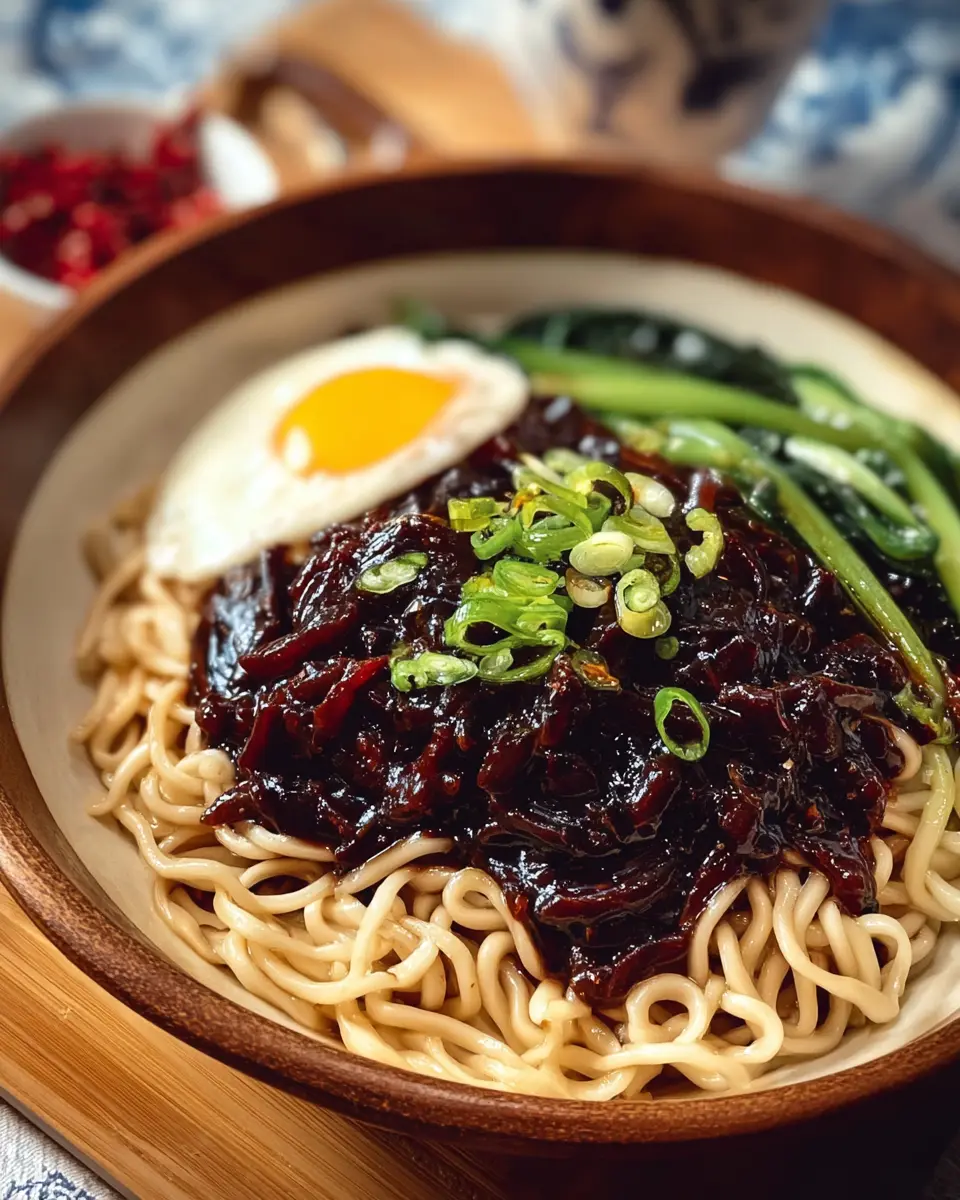
Ingredients for Jajangmyeon
When it comes to making the perfect jajangmyeon, having the right ingredients is key to achieving that rich, savory flavor profile. Let’s break down the must-haves for this delicious Korean dish.
Essential components for the sauce
The heart of the jajangmyeon recipe lies in its flavorful sauce. You'll need:
- Chunjang (2 tbsp): This Korean black bean paste is what gives your dish its signature flavor.
- Sugar (1 tbsp): Balances the savory notes perfectly.
- Chicken stock (1 cup): Provides a rich, deep base (feel free to use beef stock or even water as an alternative).
- Cornstarch (1.5 tbsp) mixed with cold water: This will thicken the sauce beautifully.
- A drizzle of sesame oil (1 tsp) adds a final touch of nutty aroma.
Key ingredients for the noodles
For the noodles themselves, look for:
- Korean thick wheat noodles (200 g per serving): Their bouncy texture is essential for a satisfying bite.
Optional garnishes for serving
Don't forget about the finishing touches! Here are some garnishes to elevate your presentation:
- Julienned cucumber: Adds a fresh crunch and great color to the dish.
- You might also consider adding sliced green onions or sesame seeds for extra flair.
Now that you have all your ingredients ready, your jajangmyeon will be delicious and authentic!
Preparing Jajangmyeon
Making your own jajangmyeon at home can be a rewarding and delicious project! Let’s break down the process into easy-to-follow steps. Whether you’re a seasoned cook or trying your hand at Korean cuisine for the first time, this recipe will guide you through making a comforting and flavorful meal.
Step 1: Prepare the Jajangmyeon Sauce
Start by warming 2 tablespoons of oil over medium heat in a large pan. Add 5 tablespoons of chunjang (Korean black bean paste) to the pan and stir-fry it for about 2-3 minutes, making sure to keep it moving so it doesn’t scorch. This step is crucial as it enhances the sauce's flavor. Once it’s fragrant, set the chunjang aside, leaving the oil in the pan for the next part.
Step 2: Cook the Beef and Vegetables
In the same pan, toss in 200 grams of beef, cut into bite-sized pieces, and cook until browned through and the fat starts to render. Season the meat with 1 tablespoon of soy sauce, 1 tablespoon of mirin, and ¼ teaspoon of ground ginger to add depth. After this, add 1 small chopped onion and sauté until it softens—this usually takes around 2-3 minutes. Then, stir in 100 grams each of chopped cabbage, zucchini, and potatoes. Cook the mixture for about 7-10 minutes. The goal here is to get the vegetables slightly softened while maintaining a bit of their texture.
Step 3: Combine Sauce with Cooked Ingredients
Once your vegetables are tender, it’s time to bring the sauce into the mix. Add the stir-fried chunjang back into the pan, along with 1 cup of chicken stock and 1 tablespoon of sugar. Stir well until everything is evenly coated and smooth. Cover and let it simmer for about 5 minutes—this allows all those flavors to meld beautifully together! As a bonus, feel free to check out this guide on Korean ingredients to familiarize yourself with the essentials.
Step 4: Prepare the Korean Noodles
While your sauce is simmering, boil 2-3 servings of Korean thick wheat noodles according to package instructions until they’re slightly al dente. Remember, you want that perfect chewy texture! When done, drain the noodles and rinse them under cold water. This will help maintain their bounce and prevent them from becoming mushy.
Step 5: Serve and Enjoy Your Homemade Jajangmyeon!
Now comes the most exciting part! Serve your cooked noodles in bowls and generously ladle the jajangmyeon sauce over the top. For a refreshing touch, top with some julienned cucumber for crunch. Sit back, take a deep breath, and enjoy the fruits of your labor. You’ve just made a delicious jajangmyeon recipe, perfect for a cozy night in or impressing friends at a dinner gathering! Happy cooking!
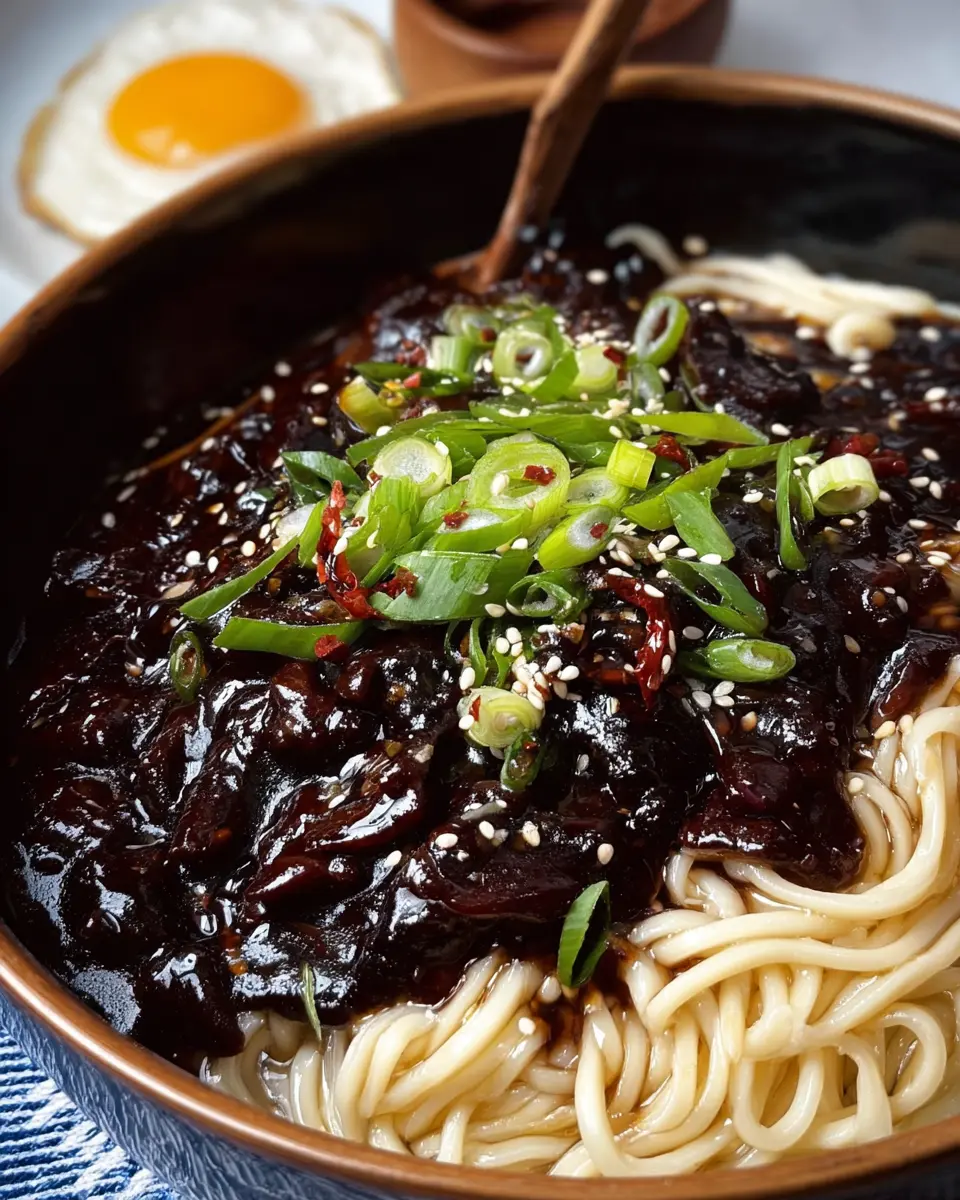
Variations on Jajangmyeon
Vegetarian Jajangmyeon Options
For those seeking a plant-based delight, vegetarian jajangmyeon is a fantastic twist on the classic recipe. Substitute beef with hearty alternatives like tofu or seitan, and load up on vibrant veggies such as mushrooms, bell peppers, and carrots. Not only will you maintain the umami flavor, but adding a variety of textures can elevate your dish. Consider checking out this recipe for vegetarian dishes for inspiration.
Spicy Jajangmyeon Twist
If you love a kick, a spicy jajangmyeon twist is the way to go! Simply incorporate gochujang (Korean chili paste) or sprinkle in some chili flakes while cooking. This adds both flavor and heat, giving your noodles a unique, exciting flair. For a more authentic experience, try pairing it with traditional Korean side dishes like kimchi to balance the spice. The perfect combo awaits—why not give it a try?
Cooking tips and notes for Jajangmyeon
Troubleshooting common issues
If your jajangmyeon sauce turns out too thick, you can easily thin it out by adding more stock or water gradually. On the flip side, if it’s too watery, let it simmer a bit longer. Also, be mindful of the chunjang—if it’s burnt during frying, the entire dish can have a bitter taste. Keep a close eye and stir frequently.
Tips for enhancing flavors
For a deeper flavor profile in your jajangmyeon recipe, consider adding a bit of fermented black bean paste along with the chunjang. A dash of soy sauce can also elevate your dish. Don’t skip garnishing with fresh cucumber; it adds a crunch that beautifully complements the hearty sauce.
Explore more about Korean flavors with this article on traditional ingredients. Happy cooking!
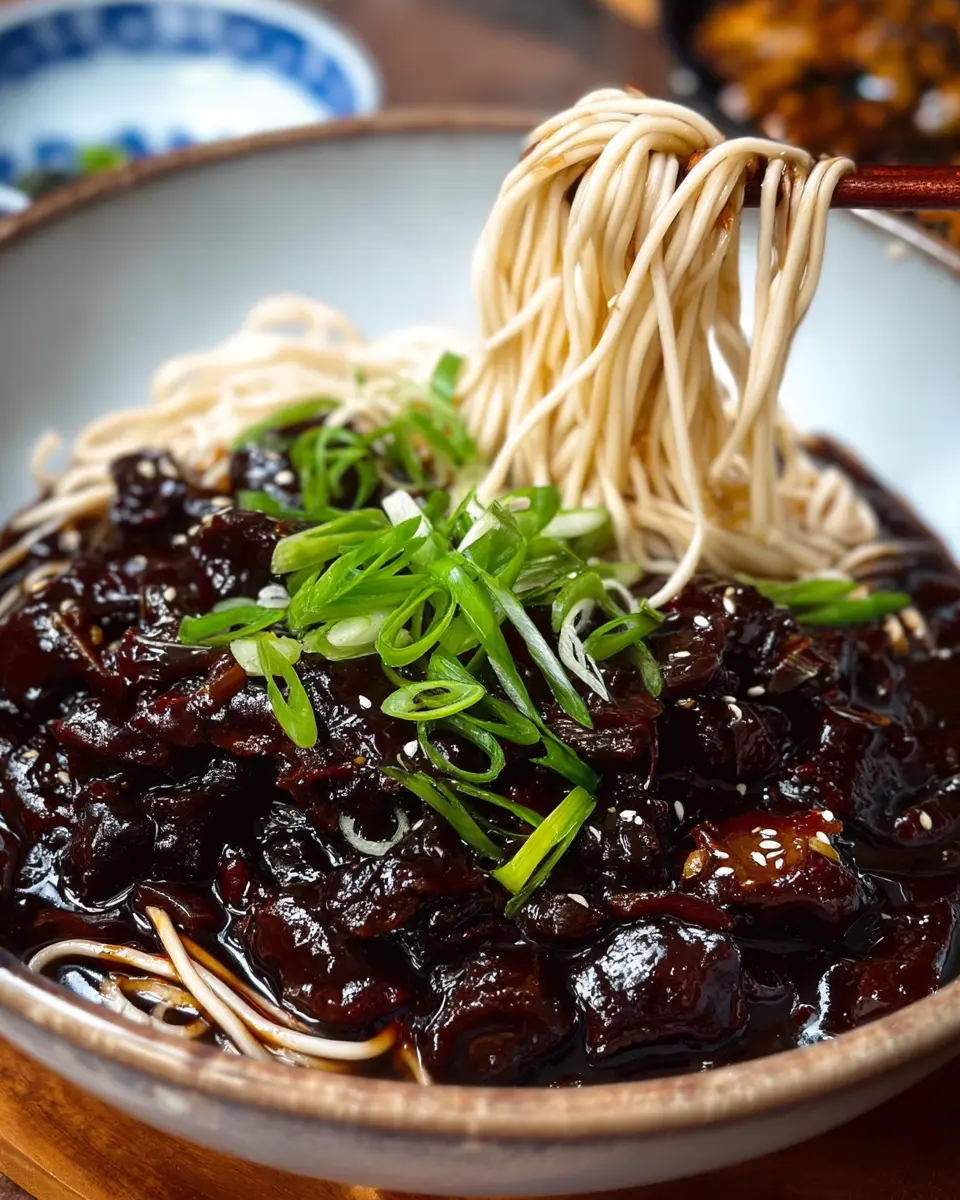
Serving suggestions for Jajangmyeon
Best accompaniments for a complete meal
To elevate your jajangmyeon recipe, consider serving it with some delicious sides that complement its bold flavors. Here are a few suggestions:
- Korean Fried Chicken: The crispy texture and savory taste offer a delightful contrast to the rich black bean noodles.
- Kimchi: A classic side, kimchi adds a tangy kick to balance the creamy sauce.
- Pickled Radish: Its crispness cuts through the richness, enhancing the overall experience.
Recommended drinks to pair with jajangmyeon
Pairing the perfect drink with your jajangmyeon can enhance your meal. Consider these refreshing choices:
- Iced Green Tea: Its mild flavor complements the dish without overpowering it.
- Soda: A fizzy drink can provide a fun contrast, which many find refreshing.
- Fruit-Infused Water: Think lemon or cucumber—this light alternative will cleanse your palate beautifully.
Feel free to experiment and discover your own favorite combinations!
Time breakdown for Jajangmyeon
Preparation time
Getting everything ready takes about 15-20 minutes. Spend this time chopping the vegetables, measuring out your ingredients, and preparing the sauce. This step is crucial for a smooth cooking experience!
Cooking time
Once you're all set, the cooking will take approximately 25-30 minutes. This includes stir-frying, simmering the sauce, and cooking the noodles to perfection.
Total time
In total, you’ll invest around 40-50 minutes to enjoy a delightful homemade jajangmyeon recipe. It's a quick yet satisfying meal that brings a taste of Korea right to your kitchen!
For more delicious Korean dishes, check out the latest Korean cooking blogs for inspiration.
Nutritional Facts About Jajangmyeon
Calories
A typical serving of jajangmyeon contains around 600-700 calories. This makes it a filling meal, perfect for a satisfying lunch or dinner.
Protein
Packed with protein, especially from the beef and chicken stock, jajangmyeon provides about 25-30 grams per serving. This supports muscle repair and keeps you feeling energized.
Sodium
Be mindful of the sodium content, which can be around 1200-1500 mg per serving, largely due to soy sauce and chicken stock. Balancing it with fresh veggies can help maintain your dietary goals.
For more on the nutritional value of Korean dishes, check out this Nutritional Guidelines resource.
FAQs about Jajangmyeon
Can I make jajangmyeon ahead of time?
Absolutely! This jajangmyeon recipe is perfect for meal prep. You can prepare the sauce a day in advance and refrigerate it. When you’re ready to enjoy, just reheat the sauce and cook your noodles fresh. This way, you maintain the delightful texture and taste of the dish.
What are some common substitutions in this recipe?
If you're in need of substitutions, don't worry! You can swap the pork with chicken or even tofu for a vegetarian option. The chicken stock can be replaced with vegetable broth or just water for a lighter flavor. Additionally, if you can’t find chunjang (black bean paste), you might try miso paste mixed with soy sauce, but it will alter the original taste slightly.
Is jajangmyeon suitable for meal prep?
Yes, jajangmyeon is a fantastic choice for meal prep! The noodles can be cooked in bulk, and the sauce keeps well in the fridge for multiple days. Pack them separately to keep the noodles from getting soggy. You'll have a quick and satisfying meal ready to go whenever you need it.
For more tips on meal prepping and exciting variations, you can check resources like Serious Eats or Bon Appétit.
Conclusion on Jajangmyeon Recipe
Wrapping up your jajangmyeon recipe journey, you’ll find that this dish is a delightful blend of flavors and textures. Perfect for a cozy night in or impressing friends, it captures the essence of Korean cuisine. Give it a try, and savor the rich, comforting taste of homemade jajangmyeon!
Jajangmyeon (Korean Black Bean Noodles)
Equipment
- pan
- pot
Ingredients
Noodles
- 600 g Korean thick wheat noodles 2-3 servings (200 g each)
Jajangmyeon Sauce
- 2 tablespoon oil
- 5 tablespoon chunjang (Korean black bean paste) https://amzn.to/3Qgr7aw
- 1 tablespoon sugar
- 1 cup chicken stock can be substituted with beef stock or just water
- 1.5 tablespoon cornstarch dissolved in 2 tablespoon cold water
- 1 teaspoon sesame oil https://amzn.to/3QfPrZY
Meat
- 200 g pork shoulder or belly cut into bite-sized pieces
- 1 tablespoon soy sauce https://amzn.to/3QlMlUA
- 1 tablespoon mirin
- 0.25 teaspoon ground ginger
Vegetables
- 1 small onion chopped
- 100 g cabbage chopped
- 100 g zucchini chopped
- 100 g potato chopped
Garnish
- cucumber julienned
Instructions
Jajangmyeon Sauce Preparation
- Begin by heating 2 tablespoon of oil over medium heat. Stir-fry the chunjang for 2-3 mins, stirring frequently to avoid burning and sticking. Set the stir-fried chunjang aside, leaving the frying oil in the pan.
- In the remaining oil, fry the pork until cooked all the way through and its fats begin to render out. Season the pork with soy sauce, mirin, and ginger powder. Stir to combine.
- Add in the onion and cook for 2-3 mins until just softened. Add in the cabbage, zucchini, and potatoes. Continue to cook for 7-10 minutes, or until the vegetables have slightly softened.
- Add in the stir-fried chunjang, chicken stock, and sugar. Stir to combine until smooth. Place a lid, and let simmer for 5 minutes.
- Drizzle in the cornstarch (dissolved in water) and sesame oil. Continue to simmer the sauce until thickened to your desired consistency, stirring occasionally.
Korean Noodles Preparation
- Boil the noodles until slightly al dente (the noodles should not be overcooked, they should still have a slight firmness when bitten).
- Immediately drain the boiling liquid and run the noodles under cold water to keep them bouncy and chewy.
- Serve the noodles with the jajangmyeon sauce. Top with slices of fresh cucumber, enjoy!




Leave a Reply