
Introduction to Greek Meatballs
If you're a young professional juggling a busy schedule, you know the struggle of finding quick yet satisfying meals. That’s where Greek meatballs, or keftedes, come into play. These delightful little bites are not just flavorful; they're also versatile and easy to whip up in no time!
Why Greek Meatballs are a Game-Changer for Young Professionals
Imagine coming home after a long day at work, and within minutes, you can have a plate of mouthwatering Greek meatballs ready to enjoy. This dish ticks all the boxes—it's hearty, nutritious, and can easily be served during a casual weeknight dinner or a lively gathering with friends.
Here’s why they’re a smart choice for busy individuals like you:
- Quick Prep and Cook Time: With just 20 minutes of prep and 12 minutes of cooking, you'll have a delicious meal in under 40 minutes.
- Freezer-Friendly: Make a big batch and store them in the freezer for those “I don’t feel like cooking” nights. Simply heat them up, and you’re good to go!
- Flavor Explosion: Packed with fresh ingredients like red onion, parsley, mint, and oregano, these meatballs offer an authentic taste of Greece that will spice up your dinner routine.
Looking for more inspiration? Be sure to check out reliable sources like My Greek Dish for additional recipes and tips!
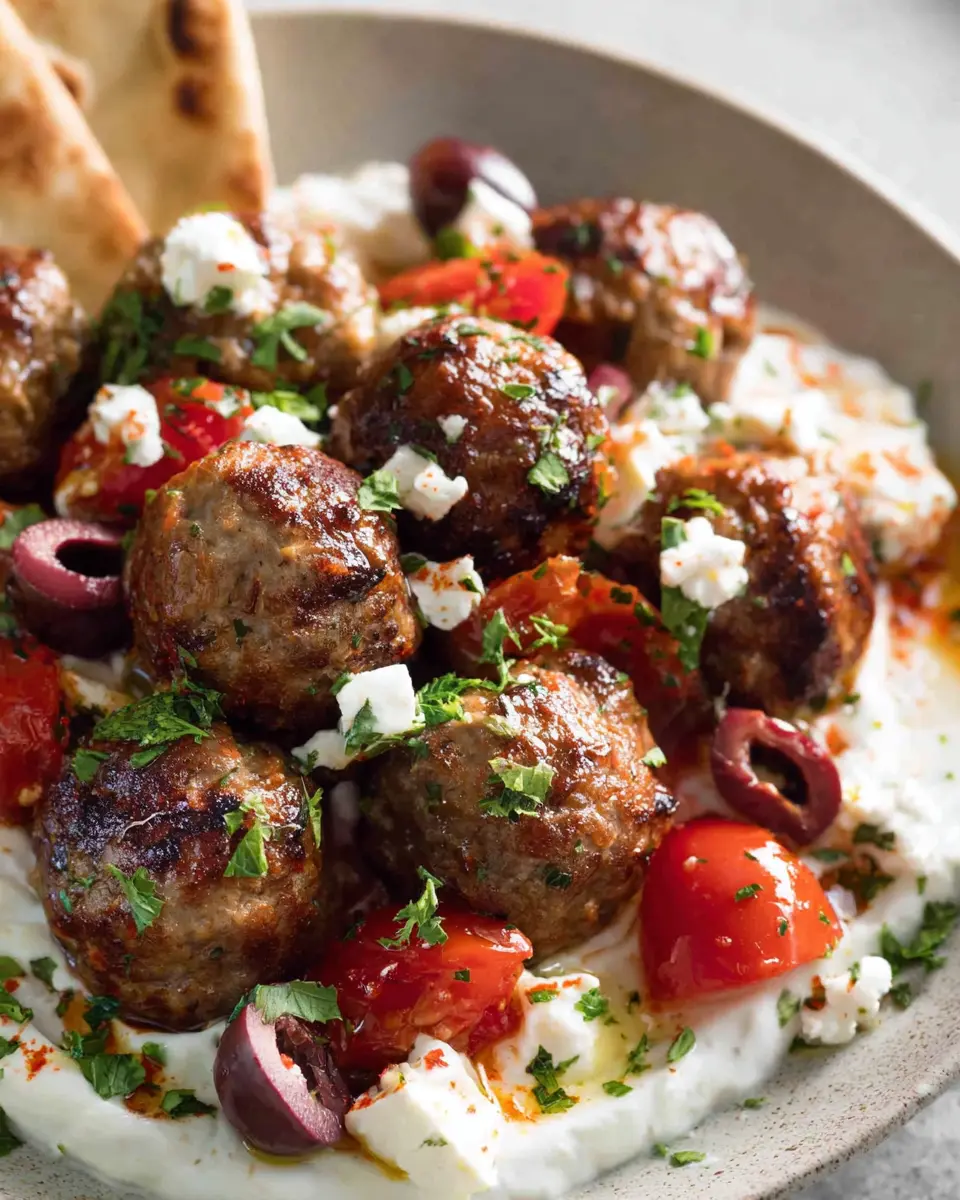
Ingredients for Greek Meatballs
Essential Ingredients for Flavor-Packed Meatballs
To create mouthwatering Greek meatballs (or Keftedes), you'll need a few key ingredients. Start with:
- Beef mince (ground beef): 1 lb forms the base, but you can substitute with lamb for a richer flavor.
- Pork mince (ground pork): 6.5 oz adds moisture and texture.
- Red onion & garlic: Essential aromatics that elevate the flavor profile.
- Herbs: Fresh parsley and mint provide aromatic brightness, while dried oregano brings depth.
- Panko breadcrumbs: These keep the meatballs light and tender.
- Egg: Binds everything together for a perfect texture.
These simple ingredients, when combined, create a deliciously juicy experience that pays homage to traditional Greek cuisine.
Optional Ingredients to Enhance the Recipe
While the essential ingredients are a solid foundation, consider these optional additions for extra flavor:
- Lemon zest: A sprinkle can brighten up the dish.
- Crumbled feta cheese: Adds a creamy texture when mixed in or served on top.
- Chili flakes: If you like a bit of heat, a pinch can make all the difference.
Feel free to customize your Greek meatballs to make them your own! For further ideas on variations, check out My Greek Dish!
Preparing Greek Meatballs
Making Greek meatballs, or Keftedes, is not just about the ingredients; it’s about creating a delightful dish that will warm your heart and soul. Let’s walk through the process together, making it as simple and enjoyable as possible.
Gather Your Ingredients
Before diving in, it’s essential to have all your ingredients lined up. Here’s what you need to whip up these delicious Greek meatballs:
- 1 red onion (grated)
- 500g / 1 lb beef mince (or lamb for a twist!)
- 200g / 6.5oz pork mince (or substitute with more beef)
- 2 garlic cloves (minced)
- 1 cup / 60g panko breadcrumbs (or regular breadcrumbs)
- 1 egg
- ¼ cup fresh parsley (finely chopped)
- 6 large mint leaves (finely chopped, spearmint is best if you can find it)
- ½ teaspoon dried oregano
- 1 tablespoon extra virgin olive oil
- Salt and black pepper to taste
Mix the Meatball Ingredients Together
Now, let’s mix! In a large bowl, start by grating the onion directly into the bowl. Add in the beef and pork mince, garlic, breadcrumbs, egg, parsley, mint, oregano, olive oil, and a sprinkle of salt and black pepper. Give it a good mix with your hands. Aim for a smooth and well-combined mixture; this should take a few minutes. If you’re looking for a firmer texture, consider refrigerating the mixture for about an hour to make it easier to shape.
Form the Meatballs
Once your mixture is all set, it’s time to form the meatballs. Use a spoon to scoop out heaped tablespoons of the mixture and roll them into balls with your hands. You can aim for approximately 32 to 35 meatballs, depending on how large or small you like them.
Cook the Meatballs on the Stovetop
To cook your beautifully crafted Greek meatballs, heat most of the olive oil in a large skillet over medium-high heat. You want enough oil to cover the skillet’s surface. Dredge each meatball lightly in flour, shaking off any excess, before placing them in the skillet. Cook them in batches for about 5 to 6 minutes, rolling them around occasionally until they’re nicely browned all over. Once done, transfer them to a plate and cover to keep warm.
Alternative Baking Method
If you prefer a healthier option, you can bake the meatballs instead! Preheat your oven to 180C/350F, spray the meatballs generously with olive oil, and bake for 20 minutes or until they turn golden brown. Although frying offers that classic juiciness, baking is convenient and still utterly delicious.
Once you’ve got your Greek meatballs ready, serve them as part of a mezze platter or toss them into a fresh salad for a hearty meal. Enjoy every bite!
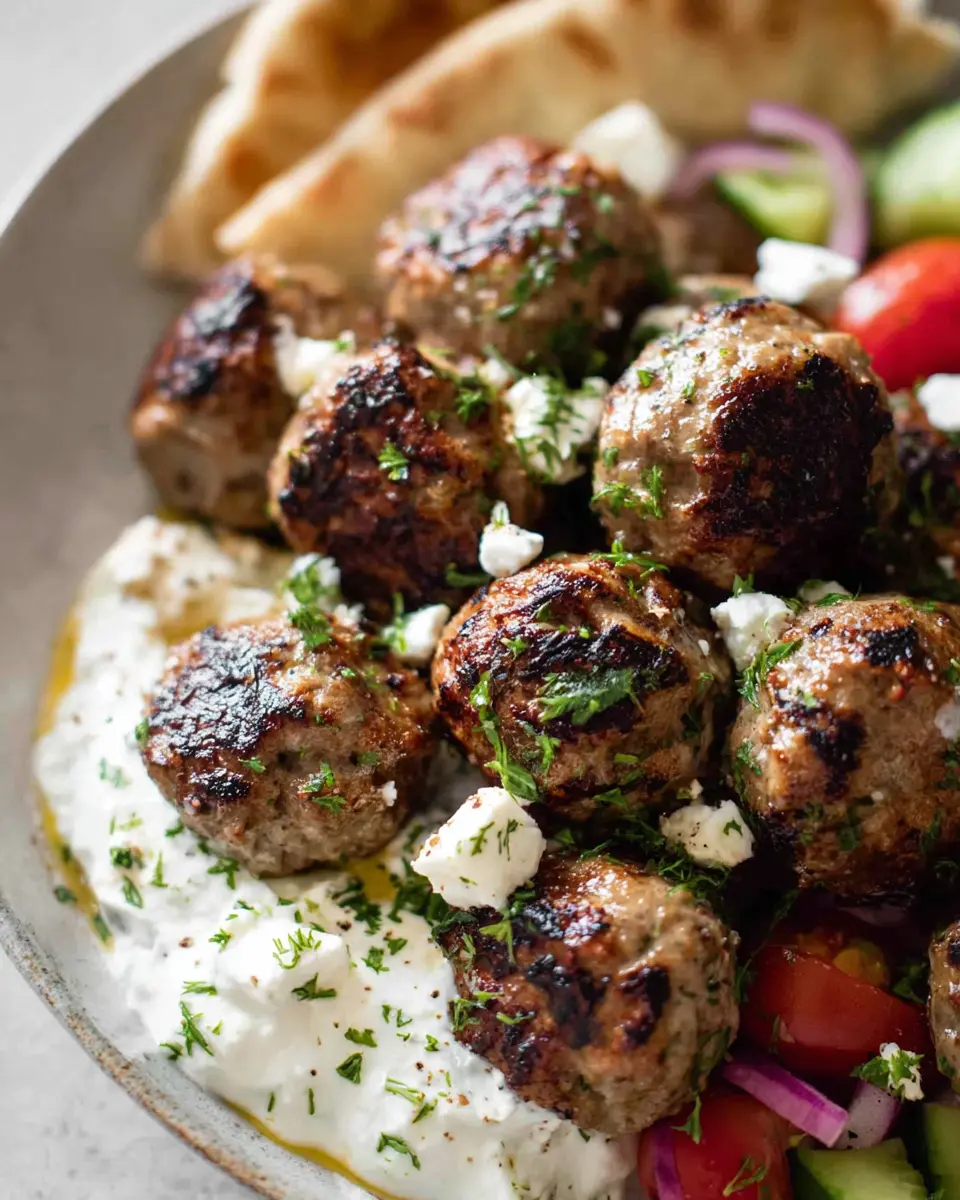
Variations on Greek Meatballs
Mediterranean Twist: Add Feta
To elevate your Greek meatballs, consider mixing in some crumbled feta cheese for a delightful Mediterranean twist. This flavorful addition introduces a creamy texture and tangy taste that pairs beautifully with the traditional spices. About 100 grams of feta mixed into the meatball blend will provide an extra layer of flavor that complements the mint and oregano. Plus, who can resist that salty goodness?
Vegetarian Option: Lentil Meatballs
If you're looking for a vegetarian option, lentil meatballs are a fantastic choice! Substitute lentils for the meat and blend them with herbs, breadcrumbs, and spices from the original recipe. This not only retains the essence of Greek meatballs but also makes them heart-healthy. Check out sites like Minimalist Baker for a great lentil meatball recipe that is just as satisfying and packed with flavor!
Cooking Tips and Notes for Greek Meatballs
Ensuring Perfect Texture and Juiciness
When making Greek meatballs, the goal is to achieve that perfect balance of texture and juiciness. Here are some helpful tips:
- Mix Gently: Over-mixing can lead to tough meatballs. Combine the ingredients just enough to bind them, ensuring a tender bite.
- Chill Before Cooking: If you can, refrigerate the meatball mixture for about an hour before shaping. This helps the flavors meld and the meatballs hold their shape while cooking.
- Don't Skip the Breadcrumbs: Using panko breadcrumbs not only adds lightness but also enhances moisture retention—key for juicy meatballs.
For added flavor, consider using fresh herbs like parsley and mint, which are staples in traditional recipes. Happy cooking!
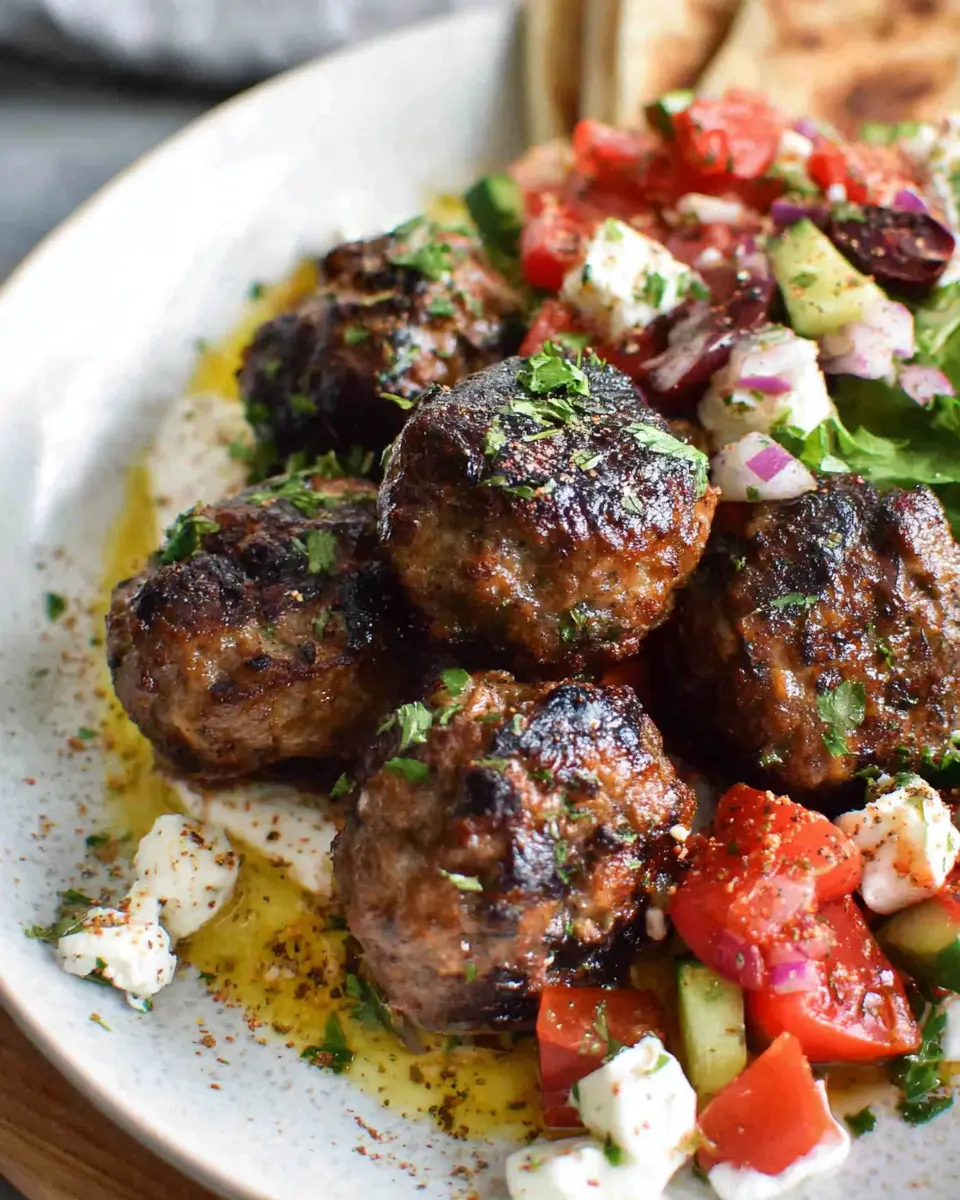
Serving Suggestions for Greek Meatballs
Mezze Platter Ideas
Serve your Greek meatballs as part of a vibrant mezze platter. Pair them with warm pita bread, seasonal vegetables, olives, and creamy tzatziki for a delightful presentation. You can also include items like roasted red peppers and feta cheese to add a flavorful twist. This makes for a great appetizer or a relaxed dinner party option!
Meal Prep and Leftover Suggestions
These Greek meatballs are perfect for meal prepping. Enjoy them in wraps or sandwiches throughout the week, adding fresh veggies and sauces. Leftovers can be frozen, retaining their delightful juiciness. Reheat them in the oven or on the stove with a splash of broth to enhance moisture, making them just as delicious as the first serving. For a fresh twist, try them in a quick stir-fry with rice and your favorite veggies!
Time Breakdown for Greek Meatballs
Planning to whip up some delicious Greek Meatballs (Keftedes)? Here’s a simple time breakdown to help you organize your cooking session:
Preparation Time
Get everything ready in just 20 minutes. This includes grating the onion, mixing the ingredients, and forming the meatballs.
Cooking Time
The sizzling part takes about 12 minutes. You’ll be pan-frying or baking them to achieve that irresistible golden-brown exterior.
Total Time
In just 32 minutes, you can serve up these flavorful meatballs! Perfect for a quick dinner or a tasty snack.
For more inspiration and tips on preparing Greek Meatballs, don't hesitate to check out this resource for authentic flavors and variations!
Nutritional Facts for Greek Meatballs
Calories per Serving
Each serving of these delightful Greek Meatballs, or Keftedes, comes in at approximately 513 calories. This makes them a satisfying yet manageable choice to enjoy without straying too far from your dietary goals.
Macronutrient Breakdown
When indulging in these tasty morsels, expect a balanced mix of macronutrients:
- Protein: The combination of beef and pork delivers a hearty protein boost, essential for muscle repair and satiety.
- Carbohydrates: Thanks to the panko breadcrumbs, you’ll find a moderate amount here, providing energy without overwhelming your meal.
- Fats: With a thoughtful blend of olive oil in the mixture, you'll benefit from healthy fats that can support heart health when consumed in moderation.
For a deeper dive into the nutritional value of these Greek Meatballs, click over to the USDA Food Data Central for comprehensive insights.
FAQs about Greek Meatballs
Can I freeze Greek Meatballs?
Absolutely! Greek Meatballs freeze exceptionally well. After cooking, allow them to cool completely, and then place them in an airtight container or freezer bag. When you’re ready to enjoy them again, simply thaw and reheat. They remain juicy and bouncy, just as delightful as when freshly made!
What dipping sauce pairs best with Greek Meatballs?
While tzatziki is the classic choice for pairing with Greek Meatballs, you can also try a homemade yogurt dip. Just mix Greek yogurt with a squeeze of lemon, a dash of olive oil, salt, pepper, and minced garlic. It complements the meatballs beautifully while adding a refreshing flavor!
Can I use other types of meat?
Absolutely! While the traditional recipe uses beef and pork, you can experiment with ground turkey or lamb for different flavor profiles. Just remember to adjust cooking times slightly, as some meats may cook faster than others. Feel free to be creative!
Conclusion on Greek Meatballs
Why You Should Try Making Greek Meatballs Today
If you haven't yet tried your hand at making Greek Meatballs (Keftedes), now is the perfect time! These flavorful bites are not only easy to make, but they're also a hit for any meal—whether it’s a weeknight dinner or a fun gathering. Packed with authentic Greek flavors, they’re sure to impress! So roll up your sleeves and get cooking; your taste buds will thank you.
Greek Meatballs (Keftedes)
Ingredients
Meatballs
- 1 piece red onion grated
- 500 g beef mince (or lamb)
- 200 g pork mince (or more beef)
- 2 cloves garlic minced
- 1 cup panko breadcrumbs (or use normal)
- 1 piece egg
- 0.25 cup fresh parsley finely chopped
- 6 pieces mint leaves finely chopped
- 0.5 teaspoon dried oregano
- 1 tablespoon extra virgin olive oil
- 0.75 teaspoon salt
- black pepper to taste
Cooking / Serving
- 0.5 cup flour any white
- 3 tablespoon olive oil
- parsley finely chopped, optional for garnish
- Tzatziki (or Greek yoghurt)
Instructions
Meatball Preparation
- Grate the onion straight into a large bowl, then add remaining Meatball ingredients. Use your hands to mix well for a few minutes until the mixture is quite smooth and very well combined.
- Optional: Refrigerate for 1 hour - makes them easier to roll + retains round shape when cooking.
- Measure out heaped tablespoons and dollop onto a work surface - should make around 32 - 35. Then roll into balls.
Cooking Meatballs
- Heat most of the oil in a large skillet over medium high heat. Use enough oil to cover the surface of the skillet.
- Cook in 2 to 3 batches: Dredge meatballs lightly in flour, shaking off excess, then place in the skillet. Roll them around and cook for 5 - 6 minutes, until nicely browned all over. Remove onto plate, cover to keep warm and repeat with remaining meatballs.
- Alternatively, spray generously with oil then bake at 180C/350F for 20 minutes or until browned.
- Serve as a starter as part of a mezze platter with pita bread and tzatziki, or make dinner plates by adding a salad like a Greek Salad.




Leave a Reply